
Monthly Archives: January 2018
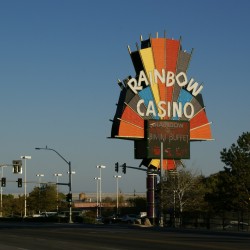
Webinar: Beyond the Billboard
Sally Mann and Alan Roxburgh lead this conversation which keeps a hopeful focus on what God is doing Beyond the Billboard. The billboard is a manufactured thing, a commodity, and it may mask a beautiful view beyond. Sally and Alan wonder if we have tended to treat our churches and our faith as a kind of billboard. There are brands and programmes and ideas, but...

Editorial: Questions of Place
We are witnessing a resurgence of interest in questions of place. This is quite a significant shift in which many of us are trying to sort out what it means to have our lives shaped by the notion of neighborhood. It’s a tricky question because since the early 60s modern western life has been characterized by mobility and an expectation of progress. All of this is changing... What, therefore, is the meaning of place for Christian life in the modern West? I’m discovering this is not as easy a question...

Editorial: Westernised Europeans and their Localities
Earlier this year I was giving a talk on evangelism to a group of European leaders, most of whom were students. One of the points in my presentation was the rediscovery of the local, of communities and of churches who were attempting to reconnect with their neighbourhood. We entered into a fascinating debate but there was one comment that caught my attention in a very acute way. Someone from Vienna questioned the contention that there was any longer such a thing as community in the local...
Editorial: Place, Time and Identity
This issue of JMP has focused on the meaning of place in contemporary societies and its implications for the life and witness of Christian communities. Each of us, as we read this, are situated in some place – our home, work place, local coffee shop, etc., that locates and gives shape to our everyday lives. We have learned through this issue that the places where we dwell are complicated geographies that in our late modern contexts, raise complex questions...
An Indigenous Theology of Place and Land
Mark MacDonald is the National Indigenous Anglican Bishop for Canada. This conversation with Alan Roxburgh contrasts the indigenous understanding of the moral and spiritual significance of land with the emphasis on contract, ownership and resource in western culture. For indigenous people 'land' describes something more akin to ‘ecosystem’, all the relationships which create and sustain life in a place. The land is holy, loved by God...
Indigenous Theology: There is no Healing Apart from the Land
Mark Macdonald explains that land is essential for healing, and also for the identity and resistance of indigenous people under the onslaught of western culture. For indigenous people the land is not inert. The Spirit infuses the land, there is personality, locality and unique relationship. Alan Roxburgh and Mark MacDonald go on the wrestle with the question of response. Christians must articulate their own ancient stories of land and people, but the time is short.
Books in conversation: The Crisis of Liberal Democracy and the book of Acts
It's a serendipitous experience to read books across different genres and make connections that stretch you. Two books by Edward Luce have done this for me recently: Time to Start Thinking: America in the Age of Descent (Atlantic Monthly Press, 2012) and The Retreat of Western Liberalism (Little, Brown Book Group, 2017). These books articulate a concern about the crisis of Western democracy apparent in many books and articles. While reading these I was also reading C Kavin Rowe’s’ The World Upside Down: Reading Acts in the Graeco-Roman Age (OUP, 2009) which made some connections which go beyond the familiar frameworks of the twentieth century.
Indigenous theology and the urban landscape
In a fifth clip from this conversation Alan Roxburgh puts a challenge to Bishop Mark MacDoanld that concerns for land are not relevant for urban life, but are a mere expression of nostalgia. Mark counters with examples from Indigenous groups who have shown an appreciation for the gifts of urban life, or who choose to live in a way which is fiercely environmental.
The parable of the mustard pot: the significance of ‘parish’ in contemporary mission and culture
Parochial Christianity resists modernity’s preference for separating ‘Christ’ and ‘culture’, embodying instead the New Testament idea that if anyone is ‘in Christ’, they already inhabit a new kind of place – the ‘heavenly’ place that Christians believe to be the world’s true destination. The vocation of the local church is thus to anticipate this new place in the midst of the old - and its principal testimony to the renewal all things will be the kind of ‘little world’ that it makes...

Sacred Space
Andrea Campanale, with other local Christians set up ‘Sacred Space’ as a way to reach spiritual seekers in their town. They organized artistic events which had the potential to open up questions of faith and Andrea learned a form of Christian ‘card reading’, which made a way into faith conversations. In conversation with Martin Robinson and Mary Publicover Andrea used the language of ‘space’ (Sacred Space) to describe the opportunities they created for talk and listening and, she felt, divine encounter.